Stupid trophy hunting of grizzly bears in BC

Miss*Bijou

Sexy Troublemaker
Nov 9, 2006
3,132
44
48
Montréal
Canada’s grizzly bears are on the run


CALGARY—It’s spring and the trophy hunters are out and about in British Columbia looking for grizzly bears to kill. They won’t be eating them of course; grizzly bear meat doesn’t taste very good. But a grizzly bear rug looks great in front of the fireplace.

It’s hard to believe in this day and age that people still want to kill an animal as iconic and magnificent as the grizzly just for the thrill of it; so a hunter can have his photo taken standing over the carcass. But hunting grizzlies is legal in B.C. and last year 334 were shot by trophy hunters.

Jeff Gailus has been tracking grizzly bears for more than 10 years. Not because he wants to kill them but because he wants to help them thrive; so he can convince governments, industry and rural and city dwellers, that if we don’t protect grizzly habitat this truly awesome animal might go the way of the buffalo.

“The grizzly bear is a powerful symbol, especially in the Canadian west. People want the great bear out there in the wilderness,” says Gailus, who first became enamoured with grizzlies when he was a newspaper reporter in Canmore, a town on the edge of Banff National Park. He eventually became so determined to save them that he wrote The Grizzly Manifesto: In Defence of the Great Bear.

About half of Canada’s 30,000 grizzly bears live in B.C. The rest can be found in Yukon, Northwest Territories and Nunavut. There are only about 600 left in Alberta even though they once numbered in the thousands. By 2006 the population had dwindled so much that the provincial government suspended the grizzly hunt. But trophy hunters are not the bears’ worst enemy.

Gailus says the bears are in far greater danger from the network of roads carved out by the oil and gas, forestry and mining industries. He also adds in the resorts, golf courses and second homes that now dot areas once wild and inaccessible. And then there are the “knuckleheads” who tear through the wilderness on their all-terrain vehicles (ATVs).

Even Banff National Park is not as safe for grizzlies as it could be, says Gailus, who now lives in Missoula, Mont., where he completed a master’s degree in environmental science. Parks Canada is much more interested in attracting tourists than protecting wildlife, he adds.

“There’s no question that once the bears are exposed to human activity, they die much more often,” says Gailus. “They get shot by people who come across them, run over by trucks and trains.”

According to Parks Canada’s own estimates, about 60 grizzlies roam Banff National Park and many of them have become accustomed to snacking on grain spilled along the railroad tracks. Not surprising then that between 1990 and 2010 about a third of the grizzlies who died had been hit by trains. Almost the same number died on the highways in the park.

Because the grizzly is such an enormous animal and a voracious eater, it must range far and wide to find sufficient food; most of the time it’s either famished after its long winter nap or fattening up in preparation.

That’s why preserving the habitat it needs ensures that it will thrive.

According to Gailus, there is a successful example of this that Canadians, and grizzlies, could benefit from and it lies to the south of here in Yellowstone National Park in the United States.

In 1975 there were only about 200 grizzlies in the park and the great bear was declared an endangered species. Now, thanks to strong environmental laws in the U.S —particularly the Endangered Species Act — and the work of various enforcement agencies and environmental groups, the grizzly population has tripled.

“Limiting human access to grizzly habitat is the only successful strategy,” says Gailus. “If we are serious about preserving our grizzly population, we need to do the same thing.”

So far, the B.C., Alberta and federal governments talk the talk, says Gailus, but when industrial expansion and tourism are pitted against grizzly conservation, the mighty bear usually loses.

Just as it does when faced with a hunter and a powerful rifle.

I once saw a golden grizzly in the Kananaskis mountain range just west of Calgary. Luckily I was in my car when it sprinted across the highway.

You never forget a moment like that, no matter how fleeting.

Here’s hoping that bear is still out there.


http://www.thestar.com/iphone/opini...158781--canada-s-grizzly-bears-are-on-the-run


I cannot understand what can possibly be enjoyable about killing any animal, let alone a great animal like a grizzly bear - for no other purpose than genuine pleasure in killing of another animal. Sorry but these people weren't raised right and there's some kind of emotional and moral defect there....


Disgraceful. Shameful. Despicable. Period.


More info:

http://www.pacificwild.org/site/abo...ies/trophy-hunting-of-b.c.-grizzly-bears.html


Trophy Hunting of Bears

by Ian McAllister


In April, the BC government once again opened the gratuitous sport hunt of bears in the Great Bear Rainforest and across BC. The genetically distinct Haida black bear is being targeted as well as the monarch of the rainforest - the grizzly. Even the coastal black bear that carries the recessive gene that produces the pure white bear, or Spirit bear, can legally be killed in over 98% of its range.

In 2007, 430 grizzlies were killed in BC, 363 of them by sport hunters, making the year the highest rate of hunter-caused mortality of this iconic bear since records have been kept. In 2009, approximately 300 grizzly bears were killed. These sad statistics put the lie to the provincial government's own description of grizzlies as "perhaps the greatest symbol of the wilderness" whose "survival will be the greatest testimony to our environmental commitment." Many of these bears are killed within the 60 provincial parks and conservancy areas where it is still legal to trophy hunt bears and a disturbingly large percentage of the bears killed are reproductive -aged females.

Conservationists and independent scientists have been saying for years that the grizzly sport hunt in its current form reveals a provincial government sorely out of step with reality on three fronts - grizzly bear science, economics, and public opinion. First Nations have been pleading with the government to stop the hunt because, as Art Sterritt from Coastal First Nations describes: "This is not a sport, it is a senseless slaughter. The trophy hunt goes against every moral teaching that we carry and is disrespectful to our culture and values."

For decades, wildlife management and regulation has been governed more by politics than by anything resembling sound scientific reasoning, despite the fact that COSEWIC (Committee on the Status of Endangered Wildlife in Canada), the federal Species at Risk Act (SARA) and the British Columbia Conservation Data Centre consider grizzlies a species of special concern.

In 2004 the European Union banned the importation of grizzly bear parts from BC over concerns that bear populations are not being managed sustainably. While grizzlies are listed as a species of special concern in Canada, they receive no legal protection under provincial or federal law. Government policy makers continue to use flawed methodology, speculation and conjecture instead of peer-reviewed science to establish grizzly bear population estimates. They argue that grizzly bear hunting is important economically when it is abundantly clear that bears are worth more to the economy alive than dead. They also say there is a social or historical imperative to maintain the hunt, when it is also obvious that a majority of British Columbians and international tourists would rather see our bears alive and protected.


Flawed Science


Male grizzlies have large home ranges, as large as 4,000 square kilometres, making them extremely susceptible to habitat fragmentation through resource extraction and road building. In this light, sport hunting can have a critically detrimental impact. Because grizzlies reproduce slowly, they also recover slowly from human-induced mortality. Furthermore, the use of boats, trucks, and blinds to stalk bears, as well as the practice of baiting of bears have, in some cases, created a modern hunt that is too efficient, tipping the balance dangerously in favour of humans.

On this point, a critical review of the BC government's 1994 Grizzly Bear Conservation Strategy, written by renowned bear scientists Drs. Brian Horejsi, Lance Craighead, and Barrie Gilbert, is as relevant today as when it was first released in 1998. As the authors wrote more than 10 years ago, "the history of population estimates in BC has consistently erred on the side of under-estimating mortality and over-estimating population size." Early estimates were based on the number of bears killed, which was arbitrarily set at a mortality rate of 5%, meaning, absurdly, that the estimated population always matched the mortality.

Between 1972 and 1979, the province declared the total population of grizzlies to be 6,660. In 1990, that number doubled to 13,160, using the same flawed habitat suitability-based model. Today, government continues to increase the estimate and has recently increased acceptable human- caused mortality rates to 9%. Essentially, the BC government has found that it is much easier to artificially increase the number of bears in BC and subsequent mortality targets than to protect bear habitat or eliminate the hunt.

In 2007, Kootenay-based wildlife biologist Dr. Michael Proctor used a method called DNA mark and recapture to survey grizzly bears in the Purcell Mountains. He came up with "estimates considerably lower than Provincial estimates." Where government biologists said that grizzly bears were at 93% of their habitat potential in the Central Purcell Mountains, Proctor's results indicated a much lower number at roughly 54%, putting bears in this region of southeastern BC close to the 50% mark - the threshold for threatened status. Proctor's research is particularly significant considering that the province used inflated grizzly bear population estimates as a cornerstone for its environmental approval of the controversial Jumbo Glacier ski resort proposal.

Political interference has also trumped science when it comes to following through on commitments to establish special management areas for grizzly bears. As far back as 1998, Drs. Horejsi, Craighead, and Gilbert noted that the British Columbia Grizzly Bear Conservation Strategy did well at documenting the threats facing grizzlies, but lacked the necessary regulatory teeth to implement landscape-based conservation measures. Indeed, as the reviewing scientists noted, the government highlighted the strategy's own limitations when it candidly admitted that it would not impose any new regulatory limitations on land use, such as logging, mining, and other industrial scale development, to protect grizzly bears.

Early in 2001, following widespread public outrage over grizzly bear mismanagement and government incompetence on this issue, the outgoing New Democratic Party heeded the demands of 68 professional biologists and established a three-year moratorium on hunting grizzly bears "pending completion of comprehensive population studies in the province's six bio-regions." Just six months later, one of the first acts of the newly elected BC Liberals was to reinstate the trophy hunt. "The previous New Democratic Party government imposed the three year moratorium for political reasons," then Water, Land and Air Protection minister Joyce Murray stated disingenuously. Well over 2000 grizzly bears have now been killed for sport in BC because of Premier Campbell's crass political knee-jerk reaction to an NDP decision.


False Economics


The second pillar of government grizzly bear management to crumble is economics. The continuation of grizzly bear sport hunting for the benefit of a handful of guide-outfitters and wealthy, mostly foreign, clients is predicated on some troubling and false assumptions about the economic benefits of grizzly bear hunting versus viewing. The enduring provincial government myth that the grizzly bear sport hunt is an important economic contributor fails to hold up under scrutiny, as a 2003 study by conservationists suggests. While direct revenue from the grizzly bear hunt is estimated to be approximately $3.3 million, grizzly bear viewing currently brings in roughly $6.1 million. Dean Wyatt, owner and manager of Knight Inlet Lodge, says he has hosted 16,000 guests since 1998, when he bought the lodge and introduced bear viewing to the Glendale River and estuary.

"Our guests are shocked when they hear that we're shooting grizzlies. Many of these people come from countries that have lost most of their large carnivores," Wyatt says of his mostly British, Australian, and European clientele. "The government has always thrown economics in our face, now we're proving that there's more money in viewing."

There's no doubt, provincial government policy shows a bias against grizzly bear viewing even though the sector is expected to grow in economic importance and proposes a much more sustainable and humane way for the general public to enjoy grizzlies than a limited entry sport trophy hunt. The Commercial Bear Viewing Association of British Columbia lists 11 member companies and the industry is growing exponentially.


Flaunting Public Opinion


Clearly, BC citizens expect much more in terms of protecting grizzly bears. In fact, while wealthy trophy hunters fly in from around the globe to shoot bears in BC, an overwhelming majority of citizens are in support of an outright ban on grizzly bear sport hunting in British Columbia. According to a random poll conducted by Ipsos Reid in 2009, 79% of British Columbians oppose the trophy hunt of bears in the Great Bear Rainforest. Five other polls have been done since 2000 on this issue, and they all show the vast majority of British Columbians oppose the trophy hunt, including a majority of BC-registered hunters.

British Columbia supports one of the greatest diversity of bears in the world, however, our government continues to treat bears as an expendable resource. The science behind the population estimates on which annual hunting rates are based is flawed, and arguments in support of grizzly bear hunting are based on false assumptions about the economic importance of the hunt. Clearly, a growing number of people believe it is time to end the trophy hunt before these animals are pushed to the brink of extinction or extirpated as they have been elsewhere in the continent.

Why do we allow the bear hunt to continue? This question has been put to government by over 100,000 people in recent months, and they have yet to be provided with an answer that addresses the three pillars outlined here.


http://www.watershedsentinel.ca/content/trophy-hunting-bears


Take Action on B.C.'s Trophy Hunt

http://www.pacificwild.org/site/take_action/trophy-hunt-campaign.html


Last edited:

luvsdaty

Well-known member
I've eaten grizzly, black bear & cougar.I agree that hunting for trophy's is stupid though. Urban growth & industrialization are unfortunately only going to get worse. I wouldn't shed any tears if they stopped trophy hunting in Canada, but i'd have a lot to say if they tried to stop hunting for food & ceremonial purposes which are guaranteed in the constitution to Canadas 1st nations.
I don't think much of bear watching either or whale watching, i don't think there's any educational value in it & it just adds to the carbon foot print as the bear habitat is in very remote areas.
 
Last edited:

luvsdaty

Well-known member
I haven't eaten grizzly but I've eaten black bear and cougar and many other wild things (I love moose and reindeer!!!) and while I think trophy hunting is barbaric and should be out-dated as a 'sport' at this point in civilization I will say that hunting bear for food is an odd concept to me just because it's really one of the least desirable meats I've ever consumed. Ever. Ceremonial hunting? Sure, but man is the meat nasty!
Bear makes the absolute best pepperoni.
 

badbadboy

Well-known member
Nov 2, 2006
9,544
308
83
In Lust Mostly
There are very few Grizzly Bear trophy licences offered each year. IIRC they are offered on an auction basis too; not too sure about that part - memory has faded. The people who buy the licences are guides who will take wealthy asians or europeans into the wilderness to kill the bear. I met a guide a long time ago and he told me he had a client from asia who was in a wheel chair. He had to carry the client deep into the bush to set him up for the bear kill. Pretty pathetic really. Paid the guide quite a lot of money per bear per year.
 

InTheBum

Well-known member
Dec 31, 2004
3,188
200
63
If I ever get some disease...and I have only a little time left to live...these assholes are going down...Nothing would give me more pleasure in life!:nod:
 

thebuttdance

Banned
Oct 15, 2010
90
0
0
Vanity
Those pictures of harm done to bears really make me sick to the stomach
 

wilde

Sinnear Member
Jun 4, 2003
3,040
44
48
When a mother grizzly bear is killed out of hibernation, they are also killing the cups. Trophy hunting aside, the lost of habitat is the biggest enemy facing the grizzly bears which is a round about way of saying we are that enemy.
 

Miss*Bijou

Sexy Troublemaker
Nov 9, 2006
3,132
44
48
Montréal


*
*
*
*
*
*
*
*
*
*
*
*
*
*
*
*
*
*
*


*
*
*
*
*
*
*


*
*
*
*
*
*


*
*
*
*
*
*


*
*
*
*
*
*


*
*
*
*
*
*


*
*
*
*
*
*


*
*
*
*
*
*


*
*
*
*
*
*

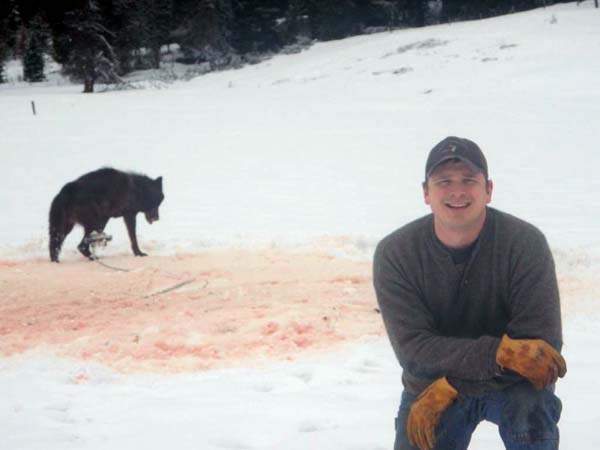
Or trapping...?

(and don't forget to smile for the camera as the wolf agonizes in the background...
A souvenir to make the enjoyment last, so you can post it on the internet
and brag about what a big man you are?)


Miss*Bijou

Sexy Troublemaker
Nov 9, 2006
3,132
44
48
Montréal


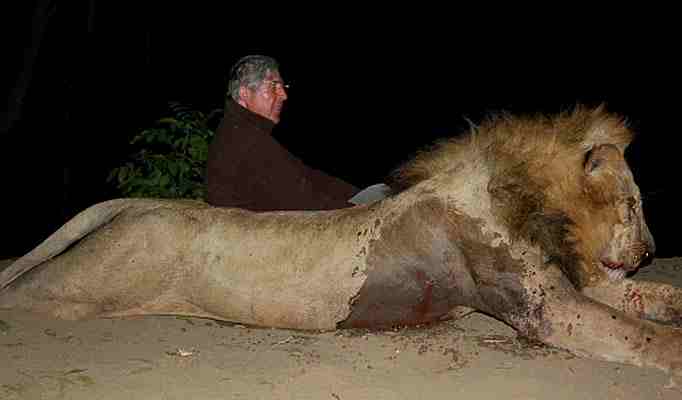
Hope the trophy makes up for it...:rolleyes:

*
*
*
*
*
*
*
*
*
*
*
*
*
*
*
*
*
*
*


*
*
*
*
*
*
*


*
*
*
*
*
*
*


*
*
*
*
*
*
*


*
*
*
*
*
*
*


*
*
*
*
*
*
*


*
*
*
*
*
*
*


*
*
*
*
*
*
*
*
*
*
*
*
*
*
*
*
*
*
*


It's beyond vulgar...


For the record, my dad used to hunt (but hasn't in like 20 years). Not trophy hunting though - thank god. Moose tastes like shit. And it was unpalatable when it arrived strapped to the roof of a truck and you've just had to hear all about how the animal whose flesh in sitting on your plate spent its last gruesome minutes before it died. Um, no thanks - I refused to eat it after that.

(Same as the poor rabbits my uncle used to trap. Poor things were frozen stiff in the snow when he'd take us to go collect them. It didn't help either that I followed my cousin into the room right as my uncle was cutting it all up. Even if they served me something different that night, I still didn't touch any of it - my appetite was all gone. That's just twisted. So gross. I've never so much as tried just one bite after that - ever.)


Plant a garden instead. Grow something instead of killing senselessly for your entertainment. Trophy hunting and killing animals to get a rug out of it (could there be anything more vulgar than that?) Donate your own skin to make a rug out of once you're dead if you want but the animal hasn't volunteered to give you his...

The whole thing is outdated, barbaric and immoral. Find a real sport. Or take up photography of live animals instead of making a sport out of some murderous, sadistic power trip.
 

Miss*Bijou

Sexy Troublemaker
Nov 9, 2006
3,132
44
48
Montréal
ugh, I knew I shouldn't have looked at this thread. I didn't need to see this shit.

I know, it's really awful. But not seeing it and ignoring it is even worse. :(


Trophy Hunters Use Bait to Lure Wolves with BC government approval


When it comes to hunting, Environment Minister Barry Penner says B.C. is home to the "fair chase."

But the use of bait and high-powered snowmobiles to target a wolf pack during a guided trophy hunt on an ice-covered lake in northern B.C. is raising questions about that assertion.

While the rest of the province was captivated by the Winter Olympics last February, a trophy hunting couple associated with the Dallas Safari Club in Texas made their way to Williston Lake reservoir west of Fort St. John to hunt wolves with Dennis Beattie's Wicked River Outfitters.

Writing about the hunt in the club's May issue of Camp Talk, Eddie and Lynne Hopkins say they started their hunt after breakfast with a guide identified as Steve Fiarchuck.

"Steve had a bait pile that he wanted to check about a mile from the lodge," they wrote. The site contained fresh tracks and their guide spotted wolves on the lake about five kilometres away.

The guide told Eddie Hopkins to jump on board his snowmobile and they sped off, leaving his partner behind.

"I never dreamed you could go so fast on a snow machine," Hopkins wrote, estimating the top speed at 140 to 150 km/h.

"As we flew down the lake, Steve explained that we had to get to the wolves before they got to shore. We were fortunate to get to the seven-member wolf pack and turn them towards the centre of the lake.

"As the pack headed out across the lake, they went in various directions. Steve shouted, 'What colour do you want?' I said, 'Black' and he headed toward a big black wolf."

Hopkins killed the wolf on the third shot after the snowmobile came "within 10 yards" of the animal.

"Steve instantly said, 'Get back on and let's try to get another one.' Steve got us up beside a huge male grey wolf and I redeemed myself by making a quick kill with one well-placed shot."

The article added: "During the course of the week, we killed five wolves, two coyotes and took a bunch of animals from the trapline.

"If you have never experienced British Columbia in the winter, you owe it to yourself to go."

Conservationists were aghast.

"It's horrific, in the context of a family of wolves," commented Ian McAllister of Pacific Wild, a group that works extensively with wolves on the B.C. coast. "That's how they're treated.

"If that's legal, it's that much more appalling."

Joe Foy of the Western Canada Wilderness Committee said the trophy hunt puts the lie to B.C.'s claim as the Best Place on Earth.

"Most British Columbians would be as sickened as I am by this so-called 'sport.' That article was some kind of sick eco-porn for those that like to hurt living creatures for the fun of it."

Penner refused to comment about the article, saying the hunt is under investigation by the Conservation Officer Service.

Beattie said in a phone interview that the hunt was perfectly legal despite a Wildlife Act prohibition against the use of a "motor vehicle or other mechanical device to herd or harass wildlife."

Beattie insisted the guide was simply using the snowmobile to prevent the wolves from running off the lake and was not herding or chasing them.

"On this hunt, they were cut off from going to the bank [shore], you drive between them and the bank, and then you do your hunting.

"They're not chasing these animals. That's totally against the law and it's against our rules of ethics."

Beattie, who is head of the Northern B.C. Guides Association, said the hunter got off the snowmobile before shooting, as required by law.

He cut the interview short by saying, "Don't bother me any more."

The Wicked River Outfitters' website states: "We'll do everything we can, within the law and fair chase, to see that you get your game."

It encourages clients to pay $53.50 to the province for a wolf tag so they can hunt the animals. Beattie charges more than $4,000 US for a week's wolf-hunting.

In the foreword to the B.C. hunting regulations, Penner states:

"Our hunting and trapping seasons continue to be based upon the foundations of conservation, sustainable use, fair chase and human safety.

"Combine that with our spectacular scenery and wildlife resources, and it's clear why British Columbia is the best place on earth to be a hunter and trapper."


By Larry Pynn, Vancouver Sun July 27, 2010

Makes me sick.


There are very few Grizzly Bear trophy licences offered each year. IIRC they are offered on an auction basis too; not too sure about that part - memory has faded.
Did you read the articles I posted? Cause that's not "very few Grizzly Bear trophy licences" IMO:

But hunting grizzlies is legal in B.C. and last year 334 were shot by trophy hunters.
In 2007, 430 grizzlies were killed in BC, 363 of them by sport hunters, making the year the highest rate of hunter-caused mortality of this iconic bear since records have been kept. In 2009, approximately 300 grizzly bears were killed.


And because a few have used First Nations and traditional hunting in the responses, I'm re-quoting this part as I assume it was missed by those posters:

First Nations have been pleading with the government to stop the hunt because, as Art Sterritt from Coastal First Nations describes: "This is not a sport, it is a senseless slaughter. The trophy hunt goes against every moral teaching that we carry and is disrespectful to our culture and values."


Well they are legally harvesting them in China if you read the link. Anyway they don't pretend it has anything to do with sportsmanship.
Perhaps not. But they pretend it has medicinal value even though it has been proven to have absolutely none. (Same as rhino horn, for that matter)
 

Dgodus

Banned
Nov 5, 2011
855
0
0
Here and There
I'm sure this practice has long since gone. But in Africa they used to only allow lion hunting for nuisance lions (read: dangerous). I know some would like to bring up the argument about encroaching into an animals natural habitat, but these weren't cities, they were tribal villages in question. However my source on this is Hemingway (a known liar) so take it for what its worth. I still think I dont need to see this (%*$&#&^ and I looked again ffs!) as there isn't a thing I can do about it (minus the time a friend and I went to a camp, we knew they weren't hunting bears around, to play drums, guitar, and sing our stone little heads off to keep the animals away). Gonna go curl up on the couch with my dog now.
 

Miss*Bijou

Sexy Troublemaker
Nov 9, 2006
3,132
44
48
Montréal
When others are so concerned by the incompetence of our government in managing properly, that they ban imports while we continue to sell trophy sport hunting rights and government officials' methods are denounced by the scientific community time and time again....it's time to stop trusting that they know what they're doing or have any interest in acting responsibly.


For decades, wildlife management and regulation has been governed more by politics than by anything resembling sound scientific reasoning, despite the fact that COSEWIC (Committee on the Status of Endangered Wildlife in Canada), the federal Species at Risk Act (SARA) and the British Columbia Conservation Data Centre consider grizzlies a species of special concern.

In 2004 the European Union banned the importation of grizzly bear parts from BC over concerns that bear populations are not being managed sustainably. While grizzlies are listed as a species of special concern in Canada, they receive no legal protection under provincial or federal law. Government policy makers continue to use flawed methodology, speculation and conjecture instead of peer-reviewed science to establish grizzly bear population estimates.


And yes, the same sickening thing happens to polar bears as well. And it's ALL greed. Sick!!!


According to whom?
You're such a smart ass! :p
 

wilde

Sinnear Member
Jun 4, 2003
3,040
44
48
So who are you to judge?
It's not about judging, or at least for me anyways. It's about coming to the inevitable conclusion that if we keep doing what we have been doing, something disastrous is going to happen. The big one being the collapse of the food chain due to the extinction of far too many species. I can see a future where all of the food we eat are farmed, there will be nothing caught in the wild anymore because there is nothing to catch and no wilderness to speak of. Is that what you want for the future generations?
 

rygu

Member
Apr 6, 2006
70
0
6
Maple Ridge, B.C.
First off, there is no such as killing for "sport". A sport is two persons or teams engaging in competition against each other. An unarmed animal with an IQ of 20 being killed with a weapon, by a human, isn't a sport at all. Not even remotely close. In a sport, both sides know they're in the game.

Hunters who kill for their entertainment or for profit and petty sense of accomplishment are complete and total cowards. I've met a few and without their guns, most are sad little people.
 

Dgodus

Banned
Nov 5, 2011
855
0
0
Here and There
Nature takes care of itself ... ultimately. Our predation will do what it will do. Will you or I stop it? Not in our lifetime. Nor would I wish it so. Do you? Are you a veggie?
Doesn't matter if someone's a vegetarian or not, this isn't about hunting for food, it's about trophy hunting. Bear isn't good eating, I dont think I've ever heard of anyone eating wolf/coyote. Doesn't matter if your guide friends think their clients are assholes or not, doesn't matter if they condone it or not - they're supporting it. Speaking of judging, weren't you the one not too long ago judging people and their porn? Pretty sure you cant flip the coin and point fingers at those expressing opposing opinions when you were pretty quick to judge previously. Yes nature takes care of itself, what we're doing to nature isn't natural though. We're going above and beyond, so we have to do something above and beyond to correct it. Being a meat eater and never hunting yourself is irrelevant, as this thread is about trophy hunting, not food/necessity hunting. How can you doubt that someone isn't "so perfect" in how they make their money. That comment doesn't even make sense. Do I do anything illegal? No. Immoral? No. I'm quite certain alot of people fall into that category, as in most people.

I'm fairly certain you're confused on the issue. This isn't about hunting for food (predation), it's about trophy hunting or hunting for ego.
 

Dgodus

Banned
Nov 5, 2011
855
0
0
Here and There
I wasn't judging peoples porn tastes, merely commenting on them. Weren't you the guy kissing SP's asses in another thread?
No, and what that has to do with being judgemental or hunting I'm not too certain. Pretty sure you dont know the meaning of judge vs comment. Calling something disgusting is a judgement.

misread that?

As apparently you have?
What have I misread, that porn was disgusting and filled with "stupidity"? Or that if you eat meat you cant judge someone for trophy killing? Please explain as I'm not drunk enough for that to make any sense whatsoever.

Still waiting for the explanation of what being a vegetarian has to do with ANYTHING.
 
Vancouver Escorts